When your car’s electrical system goes haywire and a mechanic diagnoses a dead Body Control Module (BCM), the hunt for a budget-friendly fix begins. For many drivers, the immediate reflex is to jump online, track down a secondhand module from a breaker’s yard or eBay, and hope for the best.
After all, if a brand-new unit from the main dealer costs over £1,000, finding an identical-looking unit online for £50 feels like hitting the jackpot.
Unfortunately, the world of automotive electronics is rarely that plug-and-play. Buying a random used BCM often turns into a frustrating, expensive detour. Here is why the second-hand route so frequently backfires, and the smarter way to solve your car’s electrical woes.
The Hidden Pitfalls of Buying a Used BCM
1. Part Numbers Aren’t Enough (The Software Match Trap)
You might find a used BCM with the exact same part number printed on the casing as your original unit. Surely it will work, right? Not necessarily. Modern vehicles rely heavily on software versions, vehicle configuration files, and trim levels. A BCM pulled from a base-spec hatchback might share a hardware part number with your top-spec model featuring heated seats, parking sensors, and automatic lights. Plug it in, and those specific features simply won’t function because the donor module lacks the internal software configuration.
2. The Immobilizer Nightmare
Your car’s BCM is a core part of its anti-theft security architecture. It talks directly to your key transponders, instrument cluster, and engine ECU. In many modern vehicles, once a BCM has been “married” or programmed to a specific vehicle’s VIN and security keys, its security handshake is locked. Dropping a random used BCM into your car can trigger the immobilizer, refusing to let the engine start at all. You will then have to pay a mobile auto-locksmith or specialist just to “virginize” or reprogram the secondhand unit—if it’s even possible.
3. Inheriting Someone Else’s Problem
Breaker yards and online breakers rarely test every single microscopic circuit on a salvaged module before selling it. If the donor car was sitting in a damp salvage yard with a damaged windscreen or a flooded footwell, that used BCM might already be suffering from invisible, creeping corrosion on its internal circuit board. You could install it, only for it to fail a week later.
The Sensible Alternative: Professional Repair or Correctly Matched Units
Instead of rolling the dice on a mystery box from a scrap car, you have much safer, more reliable options:
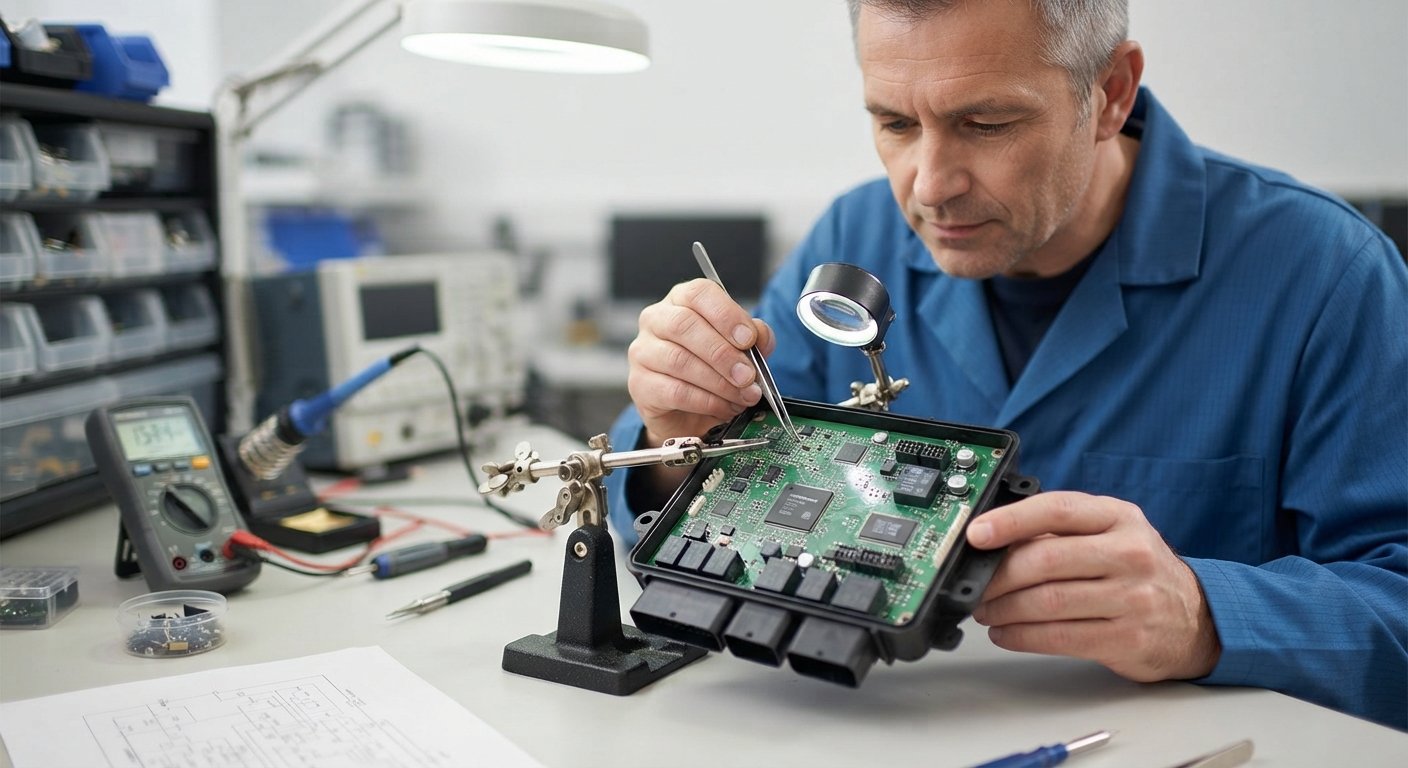
Repair Your Original Module: This is almost always the gold standard. By sending your original BCM to a dedicated specialist, technicians can isolate the exact component failure—whether it’s a blown relay, a fried driver chip, or water damage—and fix it. Because it’s your original unit, there is zero re-coding or immobilizer pairing required when you plug it back in.
Professional Supply and Coding: If your original BCM has suffered catastrophic, unfixable damage, a reputable specialist can source the correct hardware variant and pre-program or clone it to match your vehicle’s specific configuration before it ships to you.
Save Yourself the Headache
It is completely understandable to want to dodge inflated main dealer prices when an electrical fault strikes. But saving a few pounds on an unverified second-hand module often leads to wasted time, towed cars, and extra coding fees.
Skip the guesswork. If your BCM is acting up, look into professional testing and repair services like BCM Express to get your car’s central nervous system fixed properly the first time around.