Modern vehicles are rolling supercomputers. While most car enthusiasts focus heavily on horsepower, torque figures, or forced induction, there is an unsung hero quietly orchestrating every minor convenience feature in your cabin.
We aren’t talking about the Engine Control Unit (ECU) that times your spark plugs or manages fuel injection. We are talking about the Body Control Module (BCM)—the complex central nervous system responsible for everything from your courtesy lights and window regulators to your door locks and security transponders.
When a BCM starts acting up, it rarely fails quietly. Instead, it triggers a cascade of baffling electrical quirks that leave vehicle owners scratching their heads and mechanics hunting for phantom faults.
The Hidden Complexity of the Modern Cabin
In older vehicles, wiring was relatively straightforward: a switch commanded a relay, which sent direct battery voltage down a dedicated copper wire to a component. If a window failed to roll down, you checked the fuse, the switch, or the motor.
Today’s vehicles rely on multiplexed communication networks (primarily CAN-bus architecture). The BCM sits at the center of this web, interpreting signals from dozens of switches, sensors, and modules across the vehicle body.
Because the BCM coordinates so many disparate systems, it handles a heavy workload under challenging conditions. Positioned in areas prone to dampness (such as under footwells, behind gloveboxes, or near scuttle panels), these units are uniquely vulnerable to subtle environmental hazards.
Beyond the Obvious: Subtle Symptoms of BCM Degradation
Most drivers are familiar with classic electrical failures like a completely blown fuse or a flat battery. However, a failing BCM often mimics intermittent software glitches rather than a hard mechanical breakdown.
Keep an eye out for these subtle indicators of internal module distress:
The Phantom Drain: Your battery tests healthy, but every few days you wake up to a car that refuses to crank because something is keeping the vehicle’s electrical bus awake overnight.
Asymmetrical Component Behavior: One specific window refuses to operate from the driver’s master switch, yet works fine from its own door switch—even though all fuses and wiring continuity check out perfectly.
Ghost Lighting and Wipers: Indicators flashing irregularly, interior map lights glowing dimly when doors are securely shut, or windshield wipers twitching upon ignition startup.
Intermittent Key Fob Amnesia: The car intermittently drops programmed key transponders, requiring multiple button presses or forcing you to use the physical blade key to enter.
Why “Replace and Reprogram” Is No Longer the Only Path Forward
Historically, when a module suffered internal circuit board corruption or localized component failure, garages had little choice. The standard protocol involved ordering a factory-fresh unit, waiting for international shipping, and paying main-dealer labor rates to code the blank module to the vehicle’s unique VIN and immobiliser architecture.
For many vehicle owners, that route translates to eye-watering repair bills that can easily eclipse the residual trade value of an older car or commercial van.
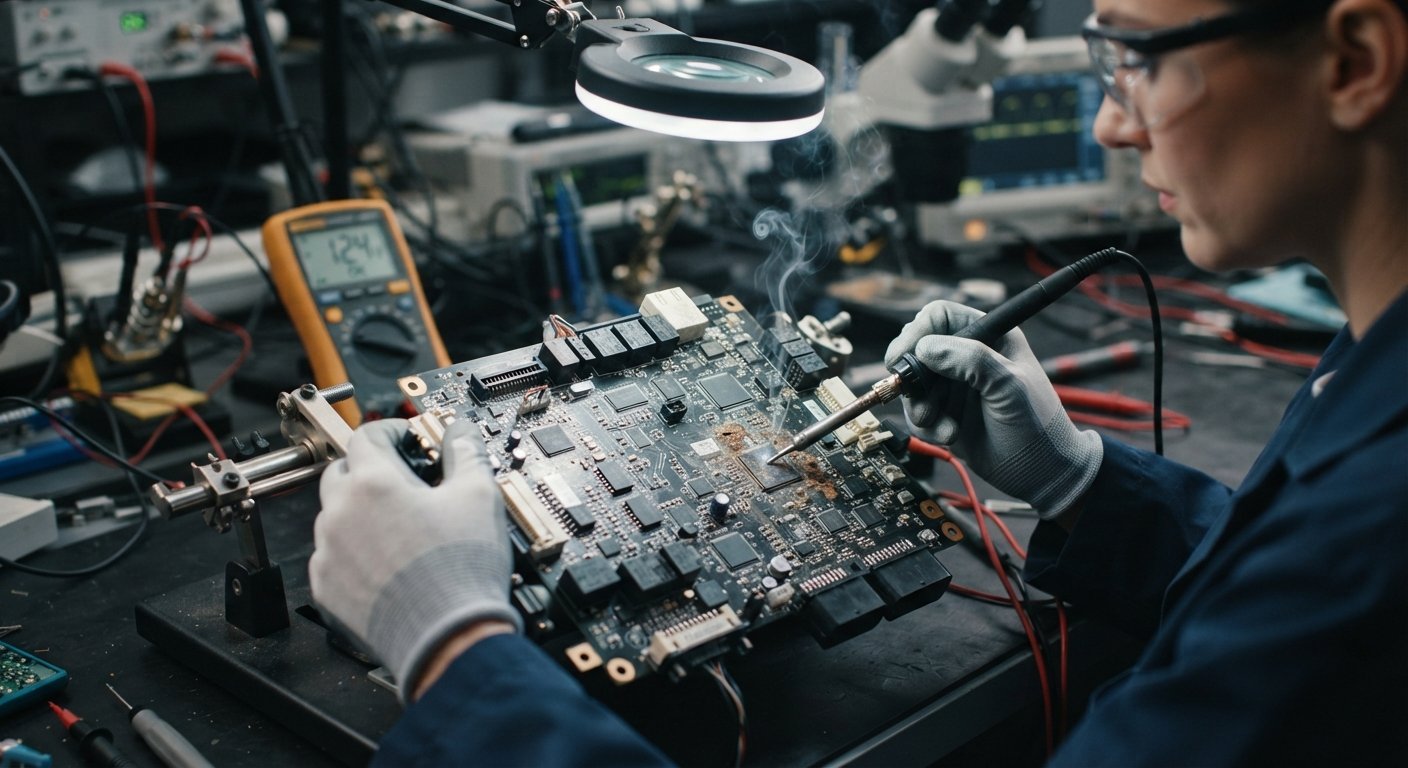
Fortunately, component-level electronics testing has evolved dramatically. Specialized diagnostic labs can now interrogate faulty modules on an individual micro-circuit level. Rather than discarding an entire assembly because a single internal voltage regulator or communication driver has failed, technicians can isolate the fault, replace failing surface-mount components, and restore the board’s structural integrity.
Preserving Your Vehicle’s Digital Identity
Opting for a targeted repair approach offers a major hidden advantage: preservation of vehicle data.
When your original BCM is repaired rather than swapped for a completely unprogrammed donor unit, your car’s exact mileage, key coding maps, chassis number, and custom configurations remain intact. That means no frustrating compatibility mismatches, no weeks of downtime waiting for factory backorders, and a significantly lighter toll on your wallet.
Whether you are a professional workshop technician managing complex diagnostic troubleshooting for a customer, or a private vehicle owner trying to solve an elusive electrical gremlin, understanding how your car manages its auxiliary systems is the first step toward a smart, cost-effective solution.
Got a stubborn electrical issue or suspect your vehicle’s body control architecture needs professional bench testing? Reach out to specialist diagnostic platforms like BCM Express to explore expert testing, repair, and cloning options designed to get your vehicle back on the road without the main-dealer price tag.