
It usually starts with a subtle sign: foggy windows that won’t clear, a slightly musty smell in the cabin, or a damp carpet underneath the passenger dashboard after a night of heavy rain.
Most drivers write it off as a loose door seal or a blocked drain hole. But under the dashboard and behind carpet trim sits the nerve center of your car’s electrical system: the Body Control Module (BCM).
When rainwater sneaks into your cabin, it often flows directly into the BCM wiring loom, causing short circuits, rapid pin corrosion, and complete electrical meltdown.
Here is what happens when water hits your vehicle’s BCM, the early warning signs to watch for, and how specialized repair and data recovery can save your vehicle without main dealer replacement costs.
Why Is the BCM So Vulnerable to Water Leaks?
In many popular UK vehicles, manufacturers position the BCM or cabin fuse box near common water ingress points:
-
Blocked Sunroof Drains: Leaves and road debris clog the rubber drain tubes running down the A-pillars, spilling water directly behind the dash.
-
Perished Windscreen Seals: Deteriorating sealant allows rainwater to trickling straight down behind the glovebox or kick panels.
-
Blocked Plenum Chamber Drains: The tray beneath your windscreen wipers (the scuttle panel) fills with water when drain holes clog, overflowing directly into the cabin heater intake.
-
Leaking Door Membrane Seals: Water runs down inside the door cards and pools in footwells, soaking wiring looms running along the floor pan.
Once moisture reaches the delicate multi-pin connectors of the BCM, electrolysis begins. Even with the ignition switched off, constant battery power creates rapid green oxidation across circuit board traces and connector pins.
Common Symptoms of a Water-Damaged BCM
If your car or light commercial van has experienced water ingress, look out for these erratic behaviors:
-
“Ghost” Electrical Symptoms: Indicators flashing on their own, headlights staying on with the engine off, or wipers sweeping across a dry windscreen.
-
Central Locking Haywire: Doors locking and unlocking rapidly while driving or refusing to open using the key fob.
-
Dash Warning Light Cascade: ABS, Airbag, and Traction Control lights illuminating simultaneously alongside
U-codecommunication errors on OBD diagnostic tools. -
No-Crank / Immobiliser Fault: The vehicle fails to start because green corrosion has severed the digital line between your ignition transponder and BCM memory.
What to Do If Your BCM Gets Wet
1. Disconnect the Battery Immediately
Do not attempt to start the engine or turn the ignition on. Supplying electrical current to a damp circuit board accelerates copper trace damage through galvanic corrosion.
2. Fix the Water Source First
Repairing or replacing the BCM is useless if the leak remains. Clear scuttle panel drain holes, seal perished door membranes, and clear sunroof lines before re-installing electronics.
3. Seek Specialist Testing & Data Recovery
Main dealerships will refuse to touch a water-damaged unit, insisting on selling a complete wiring loom and a new module costing over £1,000.
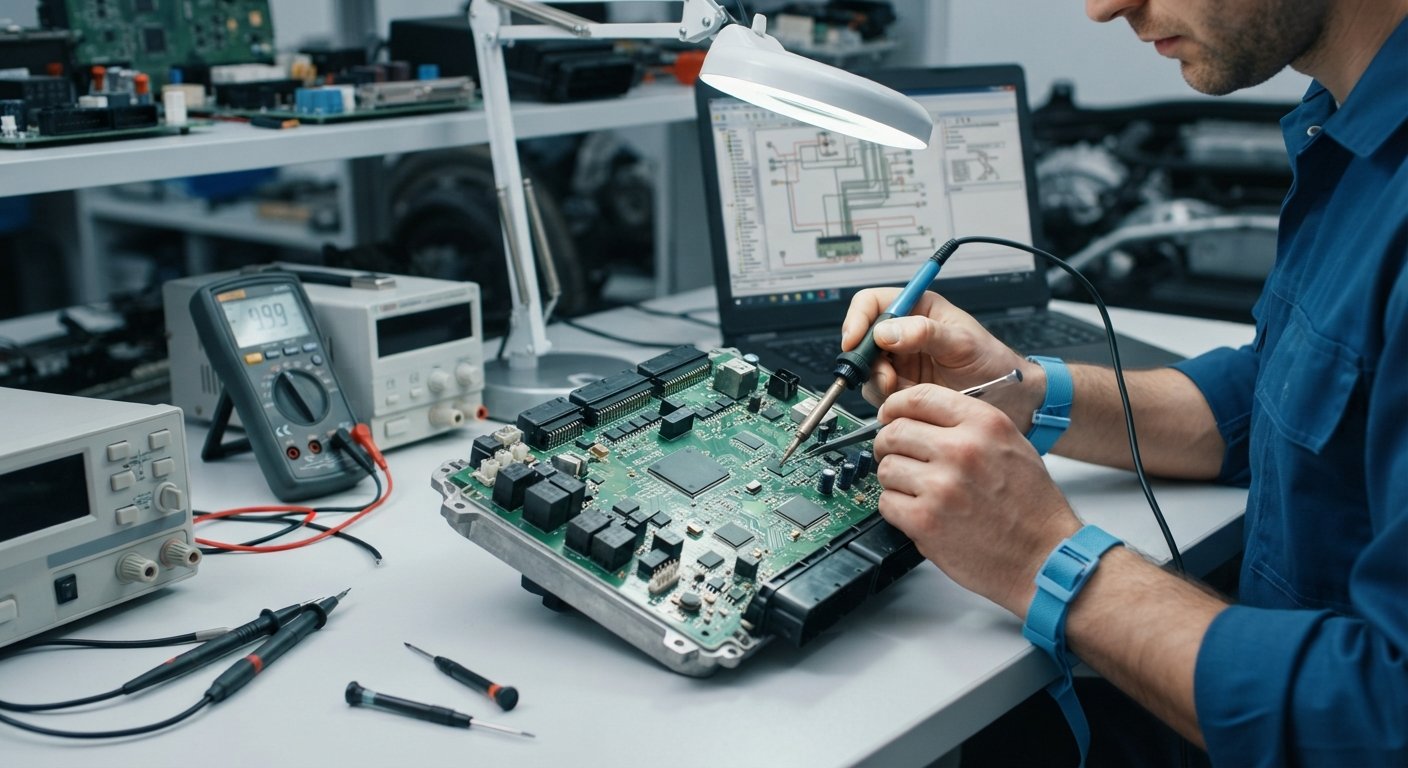
Specialist technicians, however, can often perform micro-soldering, clean internal PCB layers, or extract your vehicle’s security data directly from the damaged chip to program a healthy replacement unit.
Don’t Let Water Damage Write Off Your Vehicle
A flooded footwell or corroded Body Control Module doesn’t have to mean scrapping your car or paying steep dealer prices.
At BCM Express, our bench technicians specialize in diagnosing water-damaged units, repairing corroded circuitry, and recovering critical immobiliser data so you can plug in a working module and drive away.
Noticed damp carpets or erratic electrics after a rainstorm? Call our team today on 0800 043 6161 or head to BCM Express to arrange testing for your module.