You put the key in the ignition, turn it, and… nothing. The starter motor doesn’t make a sound, or the engine turns over endlessly without firing. Meanwhile, a padlocked car icon flashes angrily on the dashboard.
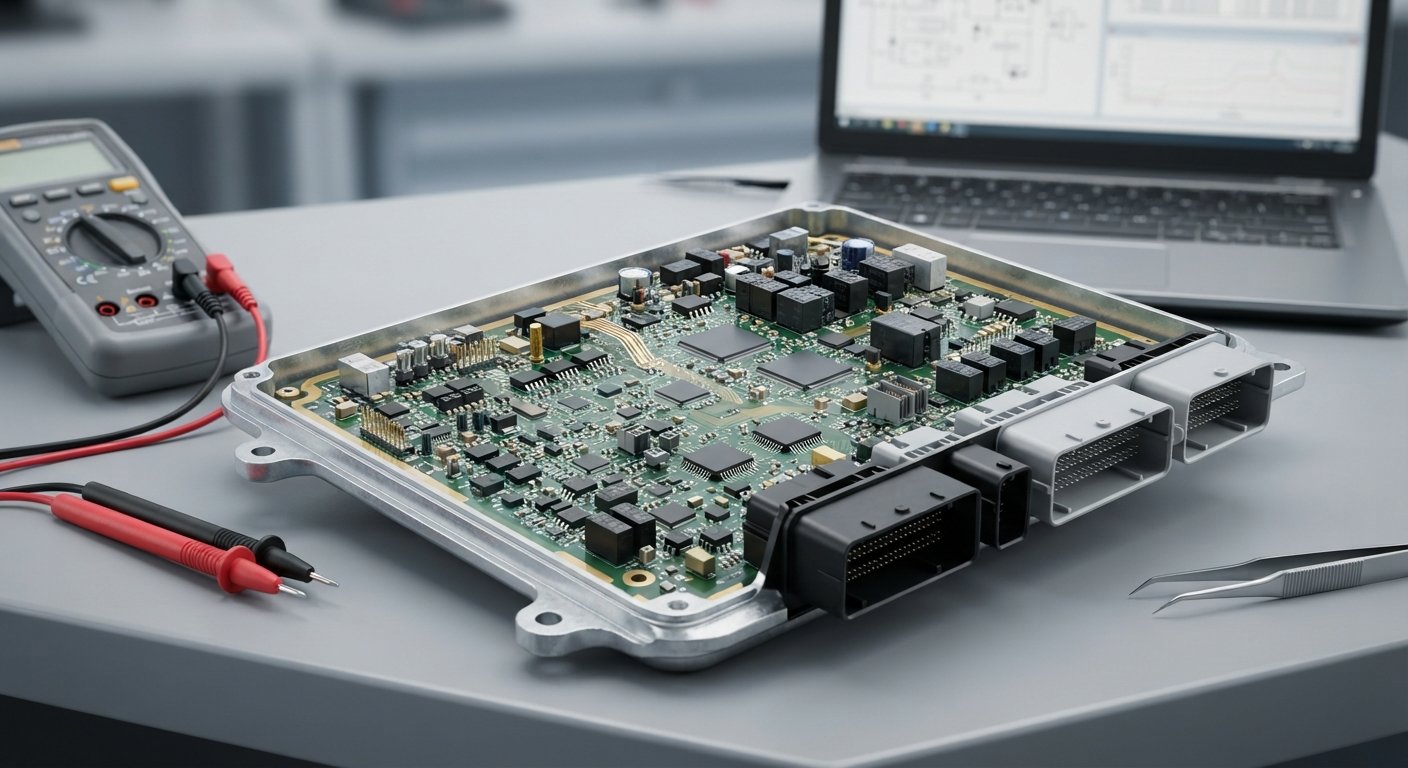
When a vehicle’s immobiliser system locks you out, the engine control unit (ECU) is doing its job: preventing unauthorized starting. However, when you have your original key and the vehicle refuses to start, the breakdown in communication frequently lies within the Body Control Module (BCM).
Here is how your BCM controls the immobiliser system, why digital signal loss prevents your engine from starting, and how specialist bench cloning gets you back on the road without paying main dealer prices.
How the BCM and Immobiliser Work Together
Many drivers assume the immobiliser system lives entirely inside the engine ECU or ignition barrel. In modern vehicles, however, key security is a multi-module handshake:
Key Transponder Read: When you insert your key or push the start button, an aerial coil around the ignition barrel reads the microchip inside your key fob.
BCM Verification: The signal passes directly into the BCM, which checks the key’s security code against its internal memory chip (EEPROM).
CAN-Bus Authorization: If the code matches, the BCM sends a digital “pass” signal across the vehicle’s High-Speed CAN-Bus network to the engine ECU.
Engine Start: The ECU enables the fuel injectors and starter motor.
If green corrosion, thermal damage, or voltage spikes sever any part of this digital handshake inside the BCM, the system defaults to anti-theft mode and blocks ignition.
Key Diagnostic Fault Codes Tied to BCM Failures
When plugging an OBD2 scanner or diagnostic tool into a non-starting vehicle, BCM-related security issues typically generate specific U-codes (Network Communication Faults) or B-codes (Body System Faults):
U0140: Lost Communication with Body Control ModuleB8301/B8302: Key Transponder Signal Circuit FailureB2580: Immobiliser Signal / BCM MismatchP1614/P1616: Wrong Transponder Key / Immobiliser Wrong Signal Received (Common on Vauxhall/Opel models)
If your diagnostic reader pulls a U0140 code alongside immobiliser faults, replacing the ignition coil or vehicle battery won’t fix the issue—the BCM itself requires specialist attention.
Why Buying a Used BCM Off eBay Won’t Work
A common mistake drivers make is buying a cheap, second-hand BCM from a salvage yard and plugging it straight in.
Because immobiliser and key transponder data are permanently coded to the donor vehicle’s VIN, plugging in a second-hand unit will result in the exact same issue: an engine that refuses to start.
To make a replacement unit work, you have two options:
Main Dealer Replacement: Pay for a brand-new, blank factory BCM and cover the cost of online dealer diagnostics and key reprogramming (£1,000+).
Plug-and-Play Bench Cloning: Send your original BCM and a matching replacement unit to a specialist like BCM Express. Technicians clone the exact security data, key codes, and VIN directly onto the replacement module.
The Plug-and-Play Solution: No Dealer Coding Needed
With BCM Express’s postal cloning service:
100% Data Transfer: All key coding, security chips, and vehicle options are transferred seamlessly.
No Vehicle Towing: Leave your car or van parked safely at home or your local garage—no need to tow it to a main dealership.
Plug & Drive: Once the cloned unit is returned, simply plug it back into the harness. Your original keys will start the vehicle instantly.
Don’t Let an Immobiliser Glitch Keep You Stranded
If your car or light commercial van is immobilized and showing communication errors, you don’t need to spend thousands at a main dealership for a simple software issue.
At BCM Express, we specialize in testing, repairing, and cloning Body Control Modules for all major makes and models.
Facing an immobiliser lock-out or non-start fault? Contact our expert team today on 0800 043 6161 or head to BCM Express to request a free quote.