When heavy UK rainstorms hit or cowl drain channels become clogged with autumn leaves, vehicle owners usually worry about wet carpets or fogged windshields. But for automotive electronics technicians, standing water inside a cabin signals something far more serious: imminent Body Control Module (BCM) corrosion.
Because vehicle manufacturers frequently locate BCMs in low-lying cabin areas—such as beneath the footwell carpet, behind glove compartments, or directly under scuttle panels—they sit directly in the danger zone for water ingress.
Here is an insider technical look at how liquid damages multiplexed control units, why early intervention matters, and how advanced bench testing can salvage modules deemed lost.
What Happens When Water Meets a Live BCM?
Water damage in a vehicle’s body control unit is rarely instant; it is a progressive biochemical process.
Even when your ignition is completely switched off, modern BCMs maintain constant standby power (Battery +30 voltage lines) to monitor central locking, alarm sensors, and keyless entry systems. When water enters the module housing, two damaging processes begin immediately:
1. Galvanic Electrolysis
Because live DC voltage is present across adjacent circuit board traces, water acts as an electrolyte. This causes micro-currents to bridge trace channels, stripping copper from positive rails and depositing oxidation across ground planes. Within hours, vital signal paths erode or bridge together, causing erratic electrical short circuits.
2. Micro-Corrosion on Fine-Pitch IC Pins
Modern surface-mount Integrated Circuits (ICs)—such as CAN transceiver chips and microcontroller units (MCUs)—have pins spaced less than a millimeter apart. Mineral deposits left behind by evaporated water form conductive crusts across these pins, scrambling high-speed data packets across the car’s CAN-bus network.
The Diagnostics Dilemma: Reading the Fault Codes
When a BCM suffers water contamination, diagnostic scan tools typically return a flood of “U-Codes” (Network Communication Faults). Common fault codes encountered during diagnostic sweeps include:
U0140: Lost Communication With Body Control Module
U0073: Control Module Communication Bus Off
U0155: Lost Communication With Instrument Panel Cluster (IPC) Control Module
The tricky part for garages is that water-damaged BCMs often broadcast corrupted data packets across the entire network, causing other healthy modules (like the ABS or Transmission controllers) to go offline. A technician might spend days replacing wheel speed sensors or steering angle modules before discovering the root cause is a damp BCM in the passenger footwell.
The Recovery Protocol: Bench Testing vs. Replacement
When faced with a water-damaged BCM, main dealers will almost universally refuse to attempt a repair, citing risk policy and demanding a total module replacement along with new wiring looms.
However, specialized electronic repair centers follow a meticulous recovery workflow:
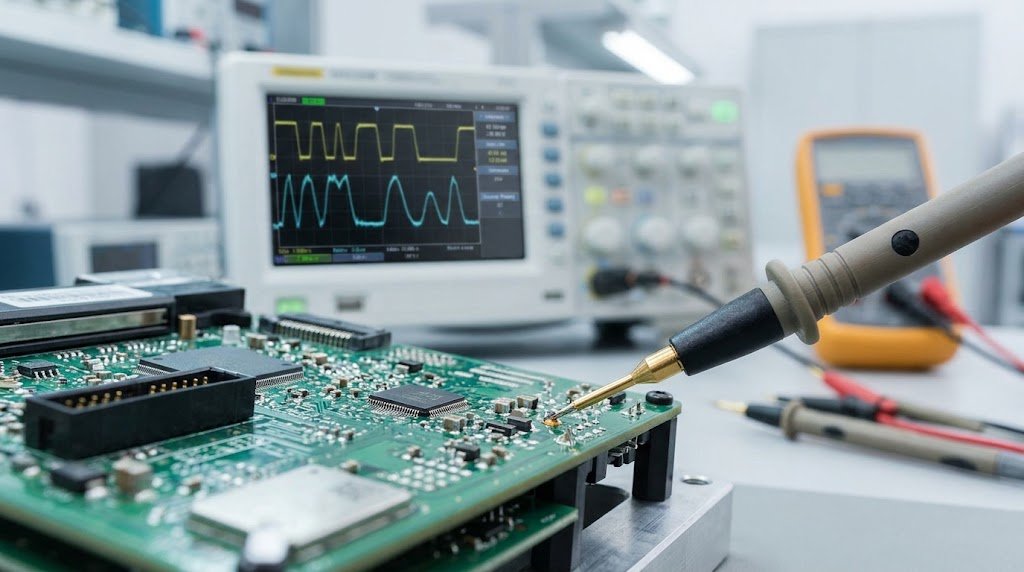
Ultrasonic Decontamination: The circuit board is stripped of its casing and cleaned in an ultrasonic bath using specialized solvent solutions to break down mineral crusts and neutralise active corrosion under BCM microprocessors.
Micro-Soldering & Trace Repair: Damaged copper traces, blown surface-mount resistors, and shorted output transistors are reconstructed under high-power stereoscopic microscopes.
EEPROM & Flash Memory Extraction: If the original board is structurally compromised beyond repair, specialized programmer hardware directly extracts the raw HEX binary data (mileage, immobiliser encryption keys, VIN, and options matrix) straight from the chip.
Hardware Cloning: The extracted data structure is written into a healthy, refurbished donor module—creating a 100% functional “twin” that plugs into the vehicle without requiring dealer software authorization or key re-learning.
Preventive Maintenance: Protecting Your BCM
Prevention is always significantly cheaper than electronic reconstruction. Vehicle owners and mechanics can take three simple steps to safeguard cabin electronics:
Clear Sunroof & Scuttle Drains: Periodically clear leaf debris from under the hood near the windshield wipers. Blocked drains force rainwater to overflow straight through bulkhead grommets into the cabin footwells.
Inspect Door & Window Seals: Worn door rubbers or compromised windscreen bonding allow water to track down the inside of the A-pillars directly onto the BCM bracket.
Act Quickly at the First Sign of Dampness: If your footwell carpet feels damp or you notice interior condensation, disconnect the vehicle battery immediately. Removing voltage stops the electrolytic corrosion process in its tracks before permanent micro-chip destruction occurs.
Suspecting water damage or facing persistent communication faults on your vehicle’s body control unit? Explore specialist diagnostic, repair, and cloning services over at BCM Express to get your vehicle back on the road efficiently.