
Modern cars are masterclasses in complexity. When you turn the key or press the start button, an invisible web of data streams across digital networks, orchestrating everything from your heated seats to your headlights.
However, when things go sideways, troubleshooting can feel like tracking a ghost. If your windscreen wipers trigger when you use the indicator, or your doors unlock themselves in the dead of night, you aren’t just dealing with a loose wire—you are likely facing a failing Body Control Module (BCM).
Specialist automotive electronics services like BCM Express see this exact scenario every single day. Here is a deeper look into why these mysterious electrical gremlins happen, why dealerships get it wrong, and how a targeted repair saves vehicle owners hundreds of pounds.
The Hidden Culprit: Moisture and Micro-Corrosion
Ask any automotive electronics specialist what kills a BCM, and the number one answer is almost always water ingress.
Unlike engine control units (ECUs), which are typically housed safely in the engine bay or sealed protective boxes, BCMs are frequently tucked away beneath dashboards, near footwells, or behind interior trim panels. This makes them prime targets for moisture:
Blocked Sunroof Drains: Leaves and debris clog the drainage tubes, forcing rainwater to track down the A-pillars and drip directly onto electrical connectors.
Worn Windscreen Seals: Over time, factory adhesive degrades, letting moisture seep past the glass and pool around interior modules.
Heater Matrix Leaks: Coolant leaks from inside the cabin introduce sticky, corrosive fluid directly onto sensitive circuit boards.
Once humidity and moisture mix with electrical current, microscopic corrosion sets in, bridging circuits that should remain separate and causing erratic digital signals.
Why “Sealed Unit” Doesn’t Mean “Disposable”
When a main dealership runs a diagnostic scan and points the finger at the BCM, the standard script is simple: “It’s a sealed unit, it’s fried, and we need to order a replacement from the factory.”
With parts ordering, international shipping, and mandatory programming labor, the total quote frequently lands between £1,000 and £2,000.
The reality? Just because a module is housed in a plastic casing doesn’t mean it’s unfixable.
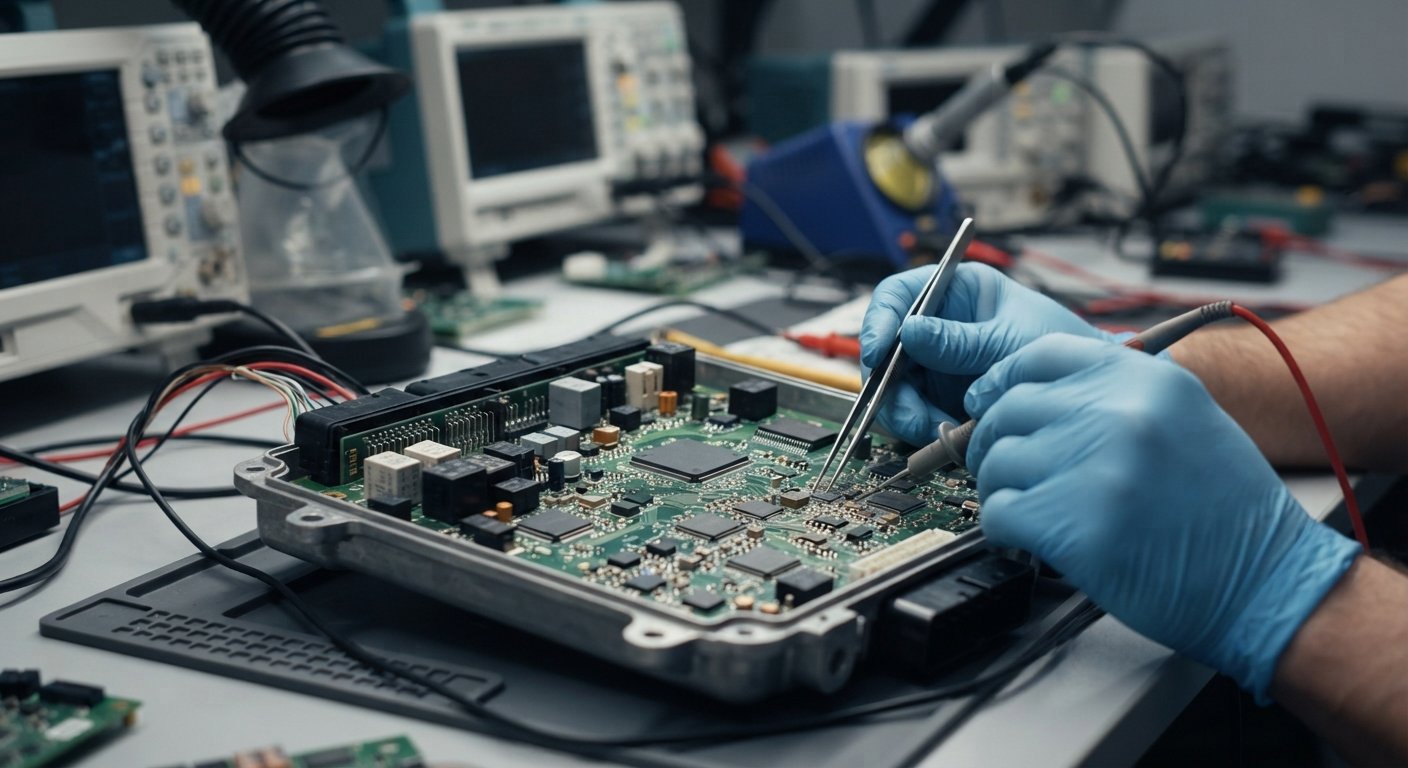
Specialized testing benches allow technicians to isolate the BCM, power it up outside the vehicle, and simulate real-world loads. Using specialized micro-soldering equipment, experts can trace short circuits, replace burnt-out surface-mount components, and clean up water damage at a fraction of the cost of a brand-new unit.
What to Check Before You Panic
If your car is beginning to exhibit strange electrical quirks, catching the problem early can save your module from total destruction:
Check Your Footwells: Feel the carpets under the driver and passenger dashboards. Are they damp or musty?
Inspect Fuse Boxes: Look for signs of green powdery residue (copper corrosion) around interior fuses.
Scan for Communication Faults: If an OBD2 scanner throws mysterious “U-codes” (such as U0100 network communication errors), it often points to a struggling BCM losing its handshake with other modules.
A Smarter Route to Automotive Recovery
You don’t need to accept a crushing four-figure bill just because a module got wet or a internal relay gave up the ghost. Choosing a dedicated bench-testing and repair service keeps original hardware alive, avoids complex coding roadblocks, and gets your vehicle back on the road safely.
If your car’s electronics are playing up, head over to bcmexpress.co.uk to explore specialist testing, repair, and turnaround options tailored to your vehicle.
.