
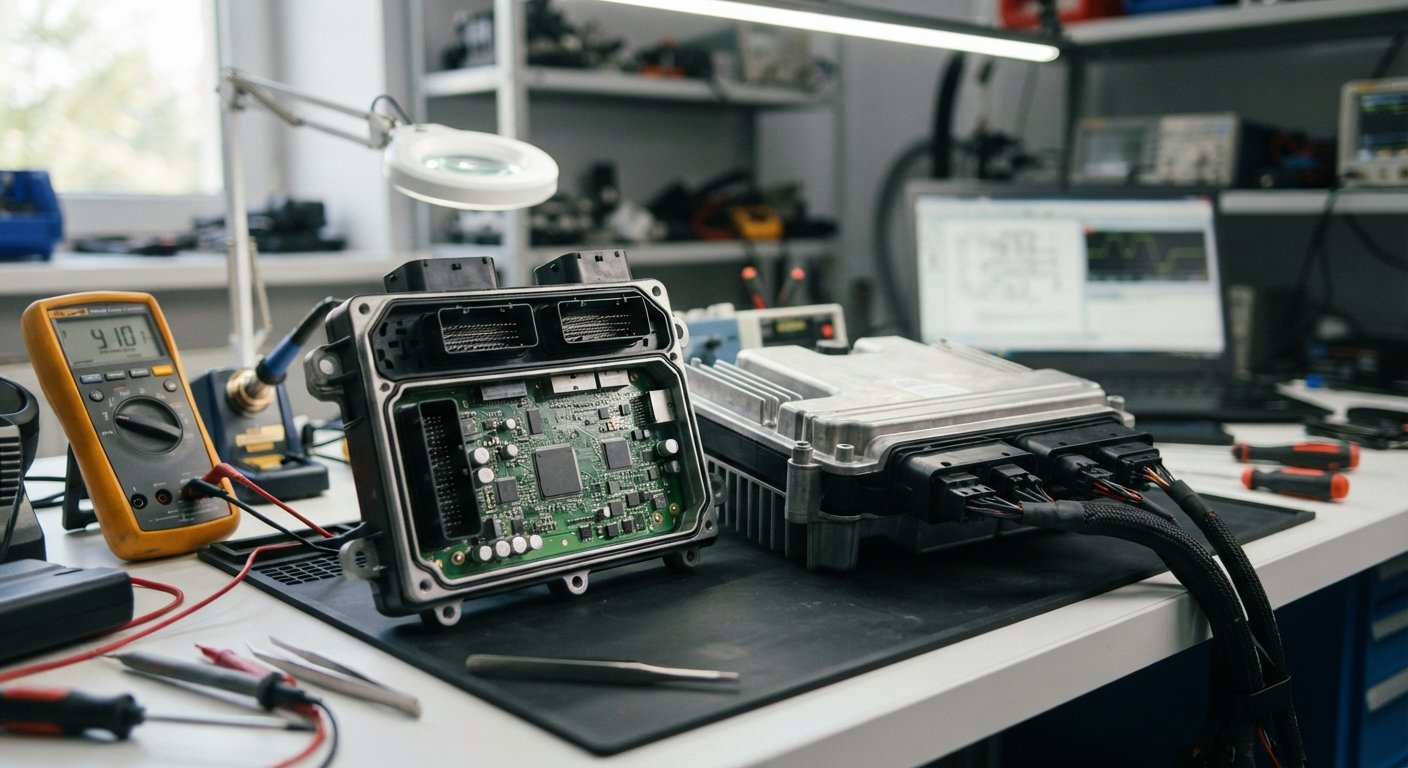
Modern cars rely heavily on complex electrical architectures to manage everything from comfort features to vital safety systems. At the heart of this network sits the Body Control Module (BCM), often described as the vehicle’s central nervous system.
Because the BCM coordinates interior lighting, security, door locks, and wipers, when it begins to fail, it rarely stops working all at once. Instead, it produces strange, intermittent electrical glitches that can baffle drivers. Spotting these early warning signs can help you catch a failing module before it causes a complete breakdown or drains your wallet.
1. Erratic Central Locking & Security Glitches
One of the most noticeable early symptoms of BCM trouble involves your doors and security system. You might experience doors locking or unlocking randomly while driving, your key fob failing to respond intermittently, or the car alarm triggering spontaneously in the middle of the night. Because the BCM processes signals from your remote receiver and door actuators, internal circuit degradation causes these signals to cross or drop.
2. Windscreen Wipers Operating Independently
If your windscreen wipers start triggering spontaneously when you start the car, refuse to turn off, or fail to park correctly in their resting position, a struggling BCM is often to blame. While wiper stalks and motors do experience standard wear and tear, erratic wiper behavior linked to module logic failure or moisture corrosion is a textbook indicator.
3. Mysterious, Unexplained Battery Drain
If your car battery keeps going flat overnight despite a healthy alternator and battery, a failing BCM could be drawing parasitic power. When internal relays inside the module stick closed or fail to enter “sleep mode” when the ignition is switched off, they continue pulling power from the electrical system, draining the battery completely.
4. Flashing Dashboard Lights and Warning Chimes
Are your dash illumination lights flickering, indicators clicking silently, or seatbelt and headlight warning chimes sounding when they shouldn’t? Since the BCM routes data signals directly to the instrument cluster, a corrupt memory chip or failing solder joints will scramble dashboard communication.
5. Immobiliser Lockout and Starting Failures
In many modern vehicles, the BCM acts as a vital gatekeeper for starting authorization and immobiliser handshakes. If the module suffers severe software corruption, data loss, or water damage, it may fail to recognize your transponder key—leaving the car cranking endlessly or refusing to turn over at all.
The Smarter Approach to BCM Repair
When faced with these symptoms, standard garages often diagnose a dead unit and quote you for an expensive main dealer replacement, which can easily run between £800 and £2,000+ once programmed.
Fortunately, component-level repair and data cloning offer a cost-effective alternative:
Component-Level Diagnostics & Repair: Technicians inspect circuit boards, repair solder joints, and replace failing microchips.
Data Cloning: If a unit is unrecoverable, vital configuration and immobiliser data can be extracted and cloned onto a fresh donor module.
Plug and Play: A cloned replacement unit requires no expensive main dealer online coding—it plugs straight into your car and works instantly.
Catch the Signs Early
Addressing electrical ghosts and erratic behavior early prevents total system failure and saves you from unexpected roadside recovery bills.
Experiencing electrical faults or suspected BCM failure? Get in touch with the specialists at BCM Express today for fast, accurate fault diagnosis and cost-effective repair solutions.